• Home
  • About
    • Index
    • Essays
    • Songs to My Inner Child
    • Woman on the Verge
    • The Eulogist
    • Dance Magic Dance
    • Moron That Later
Menu

Gregory Nussen

Performance Artist & Cultural Critic
  • Home
  • About
  • Writing
    • Index
    • Essays
  • Directing
    • Songs to My Inner Child
    • Woman on the Verge
    • The Eulogist
  • Podcasts
    • Dance Magic Dance
    • Moron That Later

Jeremy Jordan and Yael Grobglas in "Hanukkah on Rye" (Hallmark Media/Pooya Nabei)

Hallmark's latest Jewish offering: An order of "Hanukkah on Rye" piled high with racial pandering

January 10, 2023

The full text of this essay first appeared in Salon.

I want to skip ahead for a second, because against everything I experienced previously while watching Hallmark's nonsensically titled holiday movie "Hanukkah on Rye," I cried at the end. There's a moment where the romantic leads' grandmothers realize they have a deeper connection than the plot contrivance of their respective deli behemoths, and I was, in spite of my better judgment, touched. Images of diasporic Jews finding each other after lifetimes apart will always carry with it a certain bittersweet resonance, even when it comes after 80 minutes of regressive vapidity. Ya got me. 

Directed by Hallmark workhorse Peter DeLuise – whose CV includes the Lori Loughlin-starring "Garage Sale Mystery" series – "Hanukkah on Rye" seems inspired by "The Shop Around the Corner" (1940), that James Stewart and Margaret Sullavan comedy about two rival shopkeepers who fall for each other as anonymous pen pals. The often retold story also inspired 1949's Judy Garland musical "In the Good Old Summertime" and Nora Ephron's 1998 update "You've Got Mail" with Tom Hanks and Meg Ryan. But instead of a shop that sells leathergoods, music or books, with "Hanukkah on Rye" it's Jewish delis.

I'm not sure if screenwriter Julie Sherman Wolfe, who has written 24 films for Hallmark, is making some kind of comment on the Jewish lineage of this surprisingly evergreen story, yet the connection is obvious enough: the original "Shop Around the Corner" story comes from a play by Miklós László, adapted by Samson Raphaelson and directed by Ernst Lubitsch – all Jews. Ripping apart a Hallmark film has become somewhat de rigueur and extremely easy, but I was genuinely interested in this latest attempt at a Jewish-centric story partly because of this lineage, and also because the channel has made honest and concerted efforts into inclusion of the "other" December holiday since 2019. All efforts to this point have been alarming, to say the least, but this one finds the channel really perfecting the art of racial pandering. 

Read the rest of this article on Salon.

Comment

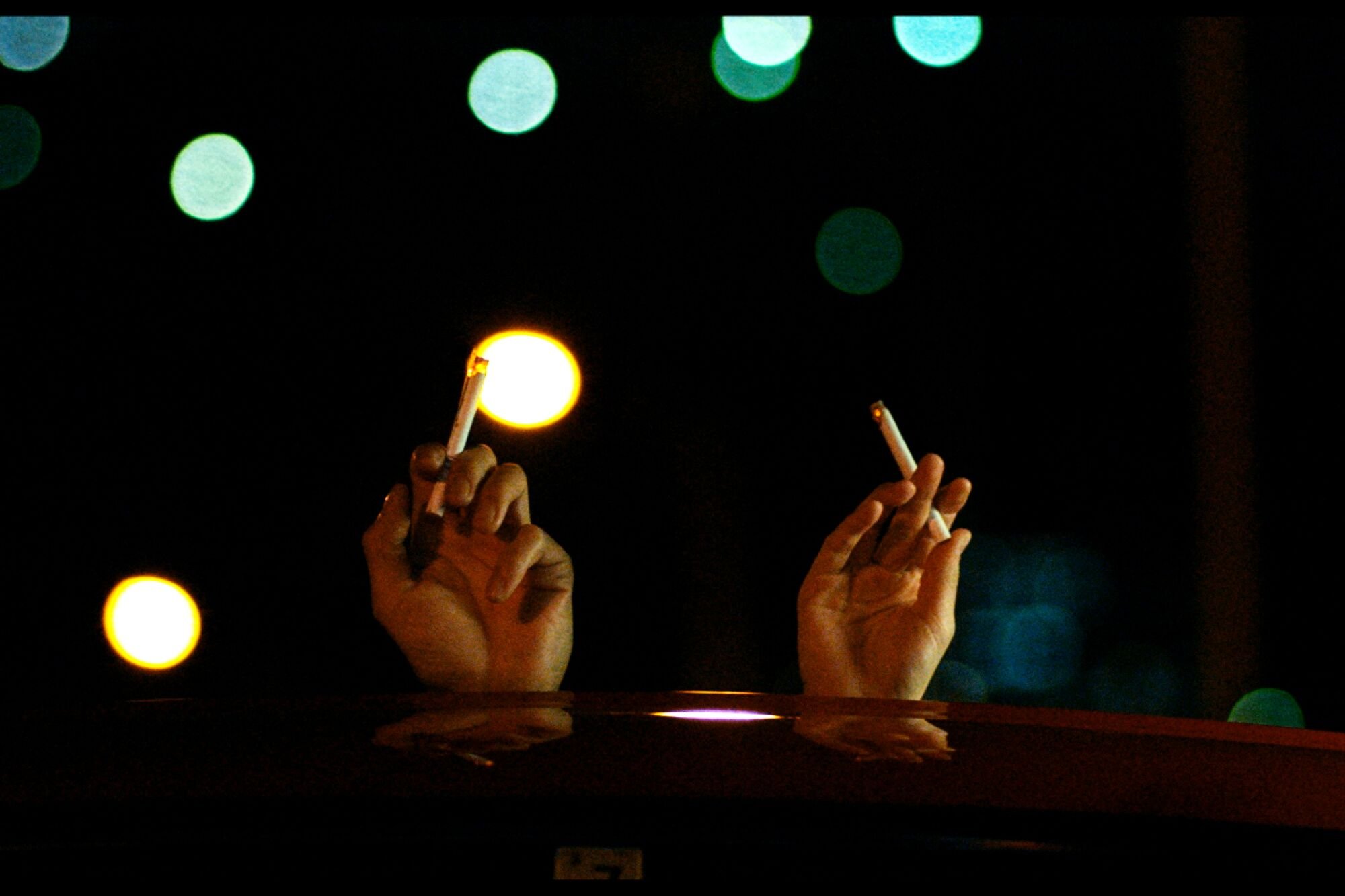
The hands of Kafuku (Hidetoshi Nishijima) and Watari (Toko Miura)

"Drive My Car" by Ryûsuke Hamaguchi (2021)

December 03, 2022

This is one of two pieces for which I was awarded the 2022 New York Film Critics Circle graduate student prize for criticism.

Late into Drive My Car, Ryusuke Hamaguchi’s three hour behind-the-scenes drama of a production of Anton Chekhov’s Uncle Vanya, a struggling Takatsuki asks his director Kafuku why he isn’t the one playing Vanya. After all, it’s a role the protagonist has become famous for playing. “Chekhov is terrifying,” Kafuku tells Takatsuki over a swirling glass of whiskey at an intimate piano bar, “When you say his lines it drags out the real you. Don’t you feel it? I can’t bear that anymore.” 

Hamaguchi has two films out in 2021. Both Wheel of Fortune and Fantasy and Drive My Car find Hamaguchi playing in territory familiar to anyone who’s followed the Japanese filmmaker, whose languid, literary explorations of domestic relationships and the ways identity gets splintered at the seams of life’s subtle traumas has garnered frequent comparisons to Jacques Rivette and the Left Bank French iconoclasts of the New Wave. Drive My Car, however, is particularly special, elevating the quotidian to the extraordinary in a deceptively simple story of a grieving widower directing a new play.

The renowned theater director and actor in question is played with a vulnerable steeliness by Hidetoshi Nishijima, whose boyishly cut black hair seems incongruent with lines of grief-induced aging and perpetually downtrodden eyes. Nishijima is a handsome man, and it seems clear the character has avoided the spotlight to cope with his myriad of tragedies. 

The plot of Drive My Car is reliably linear for Hamaguchi, with the titular car, a two decades-old sickly-sweet colored red Saab with squeaky leather seats, bringing us from point A to point B. At point A, Kafuku and his wife Oto (Reika Kirishima) share domestic bliss in a sexually active relationship in which Oto explodes with fully formed television story ideas from an orgasmic haze. Their mornings over coffee are devoted to parsing out these strange inventions that Oto herself can barely remember, while Kafuku prepares for a multi-lingual, transnational production of Becket’s Waiting for Godot. Kafuku and Oto’s intertwined and knotty love is complicated by the revelation that the late-forties couple lost a child twenty-four years ago, that they have a resigned disagreement over whether or not they should have another (he’s for it, she’s against, he won’t fight the issue), and, the minor detail that Oto has been having a continuous stream of affairs with young male ingenues on the television show for which she writes.

Oto meets an untimely, unexpected demise before the opening credits even roll, and, importantly, this tragedy happens, at least in part, because of Kafuku’s refusal to confront his beloved wife about her secrecy. The next two hours and twenty minutes constitute Point B, devoted to Kafuku, some time later, quietly wrestling with guilt and shame while directing a production of Uncle Vanya in Hiroshima, where he is forced into a chauffeur-client relationship with Misaki Watari (Toko Miura), a mousy twenty-four year old woman with a mysterious scar on her cheek. They slowly warm to each other and learn that both have gone through uncommon hardship; this, coupled with the strange coincidence that Watari is the same age Kafuku’s daughter would be had she never died, creates a magical bond between them, two people whose inability to move forward in life is neatly contrasted with the irony of their constant motion inside this tiny, compact automobile. 

All that off-stage action interweaves into a dramatization of Kafuku’s rehearsal process of a play that he has worked on both willingly and unwillingly for several years. The production is set in period-specific Russia as the play warrants, but, like the production of Godot, the actors come from a variety of linguistic backgrounds and all speak their mother tongue. And, in his many car rides, Kafuku listens to a cassette tape which has his late wife speaking all of the lines from the play except Vanya, made years ago for the director when he was playing the role himself, thus creating a bizarre, unnerving connection between Kafuku and the ghosts of his past. Hamaguchi, not content to settle on this communication along the thin veil between the living and the dead, carefully weaves in lines of Chekhov to correspond thematically with the off-stage drama. Vanya, a text about sexual infidelity, fading glory and the crumbling bones that make up a home, provide an eerie and solid foundation upon which Hamaguchi explores multiple modes of catharsis within the art-making process. This is the kind of movie that draws you into its steady, even pace; you may find yourself still in motion with the ride long after the final credits. It is, like Kafuku says about his driver’s impeccable driving ability, unlikely you’ll even realize you’re on the journey at all, so smooth is its mechanics.

So what is the “real you” that Kafuku is so afraid of becoming? Drive My Car’s magic is in elucidating a process of redemption and self-actualization for multiple characters at once. Kafuku’s avoidance of the realness transforms into a pursuit of the same, and, while Hamaguchi stops short of hollow forgiveness, he shows us that staring down what we wish we had done or said is the only path forward to dignity. Though Drive My Car is slavishly devoted to the kind of long, patient conversations we all might have on untethered journeys on the highway, something magical happens anyway: the ability to say goodbye to those we left behind. Flesh and guts and bones, all.

Comment

Franco Nero (background) as space Jesus, or something, presiding over a legion of bald children in The Visitor (1979)

"The Visitor" by Giulio Paradisi (1979)

December 02, 2022

This is one of two pieces for which I was awarded the 2022 New York Film Critics Circle graduate student prize for criticism.

One thing you should definitely know about The Visitor is that it makes no sense. I’m not sure why Drafthouse Films decided to restore the mostly forgotten 1979 science-fiction/ horror/ domestic drama (?) with an unusually stacked cast of power hitters, but I’m glad this historic wrong has been corrected. The cosmically bizarre film is directed by Giulio Paradisi (who is credited as “Michael J. Paradise” in the original release), previously a camera assistant and background actor on Federico Fellini’s La Dolce Vita (1960) and 8 ½ (1963). Without having seen Paradisi’s other directorial work, I cannot tell you exactly what he might have picked up from the Italian maestro, though The Visitor’s clownish surrealism certainly shares a certain kinship with Fellini’s devotion to the extraordinary of the everyday. Trying to describe its plot is a bit like trying to tell a friend about the craziest nightmare you had, an exercise that inevitably ends with the storyteller saying, “you just had to be there,” but let’s try anyway.

The titular visitor is the evergreen and perpetually flawless John Huston, a warrior from outer space with the inexplicably Polish-sounding name Jerzy Colsowicz. He’s a man whose all-beige safari suit is more indicative of the director than of the character, except he’s not a man, he’s an alien who has come to prevent a luciferian child from helping her parents birth Satan’s baby. Jerzy is on Earth on behalf of an intergalactic, cult-like version of Jesus Christ played by an uncredited Franco Nero, whose long flowing blonde locks of hair stand in stark contrast to the legion of bald children that sit on bated breath while he proselytizes in a cloudy room; the whole thing feels like if Tarkovsky’s science fiction sets were reimagined by Jodorowsky and Weird Al Yankovic. Add into this mix Lance Henriksen, who is the mysterious new owner of the Atlanta basketball team (not the Hawks, as it turns out, but the Rebels), and has, apparently, made a deal with a boardroom of sinister old white men in suits who have promised to deliver a championship in return for the deliverance of Satan’s progeny. If that’s not enough to fill your kooky quota, Shelley Winters (!!) plays the demonic child’s babysitter whose Mrs. Doubtfire-like exterior is jarringly complicated by her extraordinarily harsh disciplinary measures; fellow legendary auteur Sam Peckinpah has a late entry as the abortionist tasked with ridding the threat of Satanic takeover; and Kareem Abdul-Jabbar has an uncredited cameo as the dominant center for Atlanta’s rival team, the San Francisco Niners. Oh and most of the violence is carried out by pet birds. Glenn Ford is in there, too, as a detective pitifully tasked with investigating this inter-species religious war, but I don’t want to confuse you too much.

Much of this would be easily dismissed as hallucinogenic late seventies Hollywood pablum were it not for the absurd amount of on-screen talent and the inescapable fact that it's a mesmeric journey painted with a stunning palette of burnt orange and midnight blue. Shot by workhouse cinematographer Ennio Guarnier, whose curriculum vitae of over ninety films includes collaborations with more esteemed directors such as Pier Paolo Pasolini, Lina Wertmüller, Vittorio De Sica, Franco Zeffirelli and Fellini, The Visitor’s saturated vistas and stark shadows wash over the narrative’s more head-scratching moments, such as when the little child, Katy (Paige Conner), uses her telekinetic powers from the stands to make the glass on a basketball hoop shatter like she was Shaquille O’Neal. Moments throughout its run time, you might wonder what it is you’re watching, but the creeping dread and softly-focused asymmetry of this cosmic battle ultimately wins, lulling you into a meditative journey unlike any other. You really do have to be there.

Comment

Ruddy & Ebullient: Imelda Staunton in Vera Drake (2004)

June 26, 2022

“I help girls out.”

It’s 1950 in a working class suburb of London. In the midst of a joyously over-crowded engagement celebration between two equally lost souls, another couple announces their own unexpected happiness: a pregnancy. Though Vera and her husband Stanley can barely afford it, they open a new bottle of champagne, generously inviting in the promise of new life and new love, all too exciting for any monetary considerations. Riches are where you find it. And then, four police arrive to arrest Vera for administering abortions.

Mike Leigh, best known for directing films through a singularly grueling improvisational rehearsal process with his actors, typically sets his dramas in present-day London where the comedy, ample though it is, arises as a reflection of the deep pain hiding underneath the surface. Vera Drake (2004) is, in many ways, a reversal of Leigh’s usual formula. Set seventeen years before the United Kingdom legalized pregnancy terminations through the Abortion Act of 1967, Vera Drake sees Leigh playing in the sandbox of a period drama where the external tensions of post-war Europe converge with the conservative social pressures of a pre-progressive society.

Vera (Imelda Staunton), is a domestic care worker who magnanimously and exuberantly looks after her husband Stan (Phil Davis), her social butterfly of a son Sid (Daniel Mays) and her sheepishly withdrawn daughter Ethel (Alex Kelly). Around the community she is known as “good as gold,” a “diamond” who watches over her neighbors. She is also an abortionist; an identity she holds without her family’s knowledge and without any attempt at remuneration. “I take care of young girls,” as she tells the police chief who later arrests her. “It’s a service.”

Vera Drake is as much about the double life of its titular character as it is the deeply imbricated lives of the Drake family, which, aware of the lack of space they call their own, instead leans closer on each other. The inevitable moment of Vera’s arrest roughly midway through the film is realized in all of its devastating leadenness in part because Leigh is so interested in these small spaces - and the people who inhabit them. When the police finally arrive (on a tip from her partner, no less), the doom feels even more terrifying because Leigh has spent the last hour and fifteen minutes photographing the shoebox space the Drakes live in, which is currently overstuffed with seven family members and four police officers, not to mention the behind-the-scenes crew presumably hiding within the paper-thin walls.

It’s not just those spaces they inhabit but the liminal ones between them, too. As Vera, Imelda Staunton traipses between places with the same feather-like airiness we’d expect from Fred Astaire, popping into this flat to adjust a pillow and make a cuppa tea, into that flat to resituate a drifting leg on its attending ottoman. Neighbors sit on top of each other as delicately as the free-hanging spice rack above her stove, and this intermingling foreshadows the inevitability of outed secrets. While she swiftly attends to her community, Leigh accomplishes two tasks in one: presenting the inherent wall-to-wall clash of neighborly proximity and pre-anesthetizing Vera’s role as an abortionist. Vera is not necessarily a figure of feminist activism, but Leigh sets out to normalize the essentialism of this act of health care by dramatizing with almost lackadaisical off-handedness the quotidian manner in which she folds in terminations with the same weight as the folding of a blanket. Staunton approaches the abortion care scenes with the same breezy cheerfulness that she approaches her other caretaking duties. “The first thing to do is put the kettle on,” she tells one patient with an ear-to-ear smile. She’s just popping ‘round for a spot of tea, and also some essential care. “No need to be upset, I’m just here to help you.”

Leigh, who grew up in “this particular kind of working-class district with some relations living in slightly leafier districts up the road… [where] those two worlds were forever colliding,” presents in Vera Drake a London where the space you have is a privilege but not, necessarily, a determinate of happiness. The moment of Vera’s discovery is precisely disintegrative because the Drake family’s interwoven intimacy is as tightly constructed as their very home, a direct contrast to seeming miles of space between Susan (Sally Hawkins) and her mother (Lesley Manville), a wealthy family for whom she cleans. Vera dusts their massive, marble fireplace while Mrs. Wells can only muster a “you’re looking very flat-chested” to her daughter in conversation. Space to clean but none, apparently, for compassion, nor for solidarity. While Hawkins’ plastically chipper Susan has the access for what constitutes a “legal” abortion in 1950, her recourse is filtered through a Draconian set of older-male entrusted offices in which she must pretend to be psychologically disturbed to get the termination care she seeks, thus rendering her own journey in arguably more byzantine fashion than that which Vera herself administers. 

As the community’s DNA is revealed, helix by helix, it is Vera’s open-minded kindness that stands out, and which will eventually be her undoing by a world so totally shriveled up in their own emotional and sexual repression. But it is counterintuitively through Sally Hawkins' Susan that we garner just how essential Vera’s care is. Lesley Manville’s Mrs. Wells is verbally assaultive, and Susan clearly doesn’t have many friends. In a world where abortion care is seen as tacitly wrong (and, for the most part, legally prohibitive) and treated akin to the manufacturing and sale of heroin, class privilege is a meaningless prerogative. Hawkins’ Susan is, in some ways, even more vulnerable than her working-class neighbors because at least they have the benefit of a robust community. Even though she finds a doctor that seems willing to help with the abortion, the legal route to abortion care is rife with patriarchal judgment, and one that begins with the assumption that anyone seeking abortive care must be inherently mentally troubled. That Susan is a victim of rape doesn’t matter in the eyes of the law, but the possibility that she might kill herself does because the psychiatrist can recommend her abotion only on the grounds that she’s mentally unstable. All this is so important to lay out with the knowledge that Vera will inevitably be found out in the harshest terms, because it’s not just the dearth of legal abortive options but the dearth of understanding, an understanding that Vera has in spades and the lack of which destroys lives.

That implicit magnanimity supports a multitude of women of various dispositions, classes, sexualities and races. One woman is clearly not ready for pregnancy, another already has seven children and lacks the financial flexibility to take care of an eighth. Another patient treats Vera’s visit as one might a cooky neighbor, drinking cocktails and smoking cigarettes while making demeaning gestures behind her back. Later, Vera visits a Black woman who is surprised that the care is so quick and is devastated to learn that Vera has to leave, a reminder that care goes beyond the medical act. One of the houses Vera visits is populated by a triumvirate of infirm depressives, including a matriarch who, though perpetually sick, must be the one to work as the only able-bodied family member. Vera tells her, “it’s not your fault,” to which the woman simply replies: “Try telling my boss that.”

It is this dichotomy in class and financial access that makes the moment of Vera’s arrest so piercingly frustrating, for Leigh forces us to watch Vera’s world crumble in extreme close-up even as her world so desperately cries out for her help. Her own family’s reactions to the revelation, meanwhile, is carefully textured and seeded from the film’s earliest moments. Ethel works on an electric bulb factory line, and her rote devotion to her job later manifests in a mute, resolute closeness to her mother during the agonizing days of the trial; Sid operates as a suit tailor catering to clueless customers like the one played by Chris O’Dowd, and his breezy comfortability within normative social circles causes him to react with indignant befuddlement to his mother’s “immorality.” Stanley, meanwhile, operates as second-in-command to his own brother at a car garage; his moral opposition to Vera’s particular proclivities are silenced in favor of loving devotion and understanding. All of their individual paths, so delicately threaded for the first two acts of Leigh’s film, makes for exorbitantly specific reactions to the revelation of their mother’s underground life.

That specificity is realized through Leigh’s infamous improvisational techniques, no more effectively employed than in the moment of the police’s arrival. Behind the scenes, only Imelda Staunton knew of her character’s secret identity, and none of them, including Staunton, knew that one day, four cops would burst the family’s bubble of contentment. In other words, as Leigh told an audience at the British Film Institute in October of 2021 as part of a retrospective on his work, “characters knew what they would know and no one knew what they wouldn’t know.” That mirroring of process with content is highly unusual, but the rigorous six months of characterization work, emanating as it did from the actors themselves, creates an organic reaction from all of them that makes its finished product as explosive as a tinderbox. 

The police’s main interest is the legality, not the morality, but it is the latter upon which Vera is ultimately judged. As the police investigation gets closer to the Drake home, the guests continue to arrive to celebrate the engagement of Reg and Ethel, and Leigh, foreshadowing the coming storm, films the arrivals from within the small confines of the Drake hallway. Freestanding frames and hooks are barely flush with the thin walls and Dick Pope’s camera hovers just above Sid’s tall shoulders, a group of giddy party attendees happily crushed together. Vera invites them “come on, tuck in,” and they all giddily oblige. When the Bobbies arrive, the Drakes are in the middle of discussing where Reg and Ethel might live. Leigh has Dick Pope shoot their arrival through a small, four-paneled window in the living room, and the four policemen, led by Det. Inspector Webster (Peter Wight) walk out of their vehicle onto the lightly snow-dusted street. The family discusses Christmas plans, Stanley cheekily references future children and Frank and Joyce (Heather Craney) wordlessly negotiate when to make the announcement of their own, a pregnancy they didn’t expect. Almost as if Leigh is setting up this family for the highest and lowest of life’s ebbs and flows, Frank announces his wife’s pregnancy a mere five seconds before we hear the first knock on the door. Too caught up in their own joy, the family doesn’t seem to think it strange there is someone there, and Stanley is left to answer the door to all four policemen huddling in the narrow door frame of his humble home. Stanley, barely processing the news of his brother’s impending fatherhood, cheeks flush with the red of the Detective Inspector’s tie, can only lamely respond to the request to speak to Vera with “we’re having a party, my daughter’s just got engaged.” Now there are eleven people in this shoebox apartment, and Webster kindly says, “sorry to interrupt your celebrations but we must talk to Miss Vera Drake.” 

Then the moment of realization as Leigh immediately cuts away from a band of plain-clothes detectives to the ruddy, ebullient face of Imelda Staunton that slowly drips down into abject horror. Ethel was once thought of as permanent shut-in, but Vera’s sly backstage maneuvering and insistence on the irrationality of romantic love (“we found each other, miracles do happen,” she says to her husband Stanley in an earlier scene) brings about an uncommon engagement she basks in as if it were her own; a woman who spends years helping women finally gets to celebrate a pregnancy of her own flesh and blood. These once-in-a-lifetime events paint Vera’s face flush with a double-shot of strawberry red, but the sight of the four police officers transforms that lush color into a beet purple of recognition: “I know why you’re here,” she tells Webster:

Webster: “Why are we here?”

Vera: “Because of what I do.”

Webster: “What is it that you do, Mrs. Drake?”

Vera: “I help young girls out.”

Webster: “How do you help them out?”

Vera: “When they can’t manage.”

And then later:

Webster: “You perform abortions, don’t you?”

Vera: “That’s not what I do dear. That’s what you call it, but I just help them out. They’ve got no one else to turn to, what else am I going to do but help them out?”

As the police escort Vera out of her tiny home, Leigh reverses the orientation of the shots which brought in so many visitors, backing out of the hallway, as the family insists it’s all a mistake. This small courtyard which has been the playground for Vera’s most delicate exploits becomes a dangerous cross-fire of leering eyes and gossip. As she’s escorted through the snowy street into a police car, Sid calls after his mom and a young boy peeks behind a curtained window. As with all Leigh’s films, discoveries are made in tiny moments. The manner of holding a glass, or letting eyes stay closed to savor a first kiss; here the cascading moments crescendo to the ultimate knowledge of Vera’s pregnancy terminations, a “ticking time bomb,” as Leigh himself called it, that can shake the ground underneath any family’s bliss, even a family with the stable fortitude of the Drake’s. It’s a moment positioned almost exactly mid-way through the film, and it is a mountain peak that serves as an apex for both the extremity of joy her family can experience and the harmonious fluidity of her community. For the rest of the way, Vera’s typical brand of chatty friendliness is quashed into near muteness, a stammering inability to both defend her actions and remain honest towards the authorities, insisting, even, that she still call them “sweetheart” and “dearie” even as they prepare to send her to prison. Her tiny figure shoved into the bottom recesses of the frame, Vera makes no attempt to hide what she’s done from either the investigators nor the judge (Jim Broadbent); partly out of an honest pride, partly out of deferential respect.

Vera gets sentenced to two and a half years of incarceration for violating the “Offences Against the Person Act” of 1861, ironic in its name considering who Vera is and self-evidently outdated even by the setting of the film. The community, meanwhile, suffers. Vera’s mother (Sandra Voe), a woman suffering potentially from dementia, doesn’t get looked after, and the family of invalids turn further inwards. The family members debate the morality of Vera’s work, and it is Vera’s future son-in-law Reg (Eddie Marsan) who passionately defends her more than anyone else: “Don’t seem fair. Look at my mum. Six of us in two rooms. It’s alright if you’re rich. But if you can’t feed ‘em, you can’t love ‘em, can you?” 

Most heartbreakingly, though, is that tiny little space, the Drake living room. Now missing it’s exuberant matriarch, it somehow looks vacuous.

Comment
images-2.jpeg
filmography.jpg

Mémoire Involontaire, Or: Self-Reflexivity in the Cinema of Agnès Varda and Abbas Kiarostami

January 15, 2022

“I’m Mohammad Ali Keshavarz, the actor who plays the director. The other actors are all locals.”

-Opening lines of Through the Olive Trees (Abbas Kiarostami, 1994), spoken by Mohammad Ali Keshavarz.

“I'm playing the role of a little old lady, plump and talkative, telling her life story.”

-Opening lines of The Beaches of Agnès (Agnès Varda, 2008), spoken by Agnès Varda.


It would perhaps be easier to talk about the gulf that separates Abbas Kiarostami from Agnès Varda. The former, easily considered the greatest cinematic export from Iran’s New Wave, was more inspired by a handful of somber, grounded Italian neorealist films and the national poetic mythology of his native country than he was the burgeoning cross-artistic pollination that bred the French New Wave. Varda, for her part, was an iconoclast who spent the bulk of her last twenty years making DVD extras for her earlier films and multimedia installation pieces, including one where she dressed up as a walking, talking potato. No record of them ever meeting exists, though Varda did shoot in Kiarostami’s native country, the paratextual The Pleasure of Love in Iran (1976) which accompanied One Sings, the Other Doesn’t (1977), and Kiarostami’s late career masterpiece Certified Copy (2010) was shot at least partially in the French language. Varda’s penultimate film Faces Places (2017), the freewheeling travel documentary co-directed with photographer JR, was screened at the 70th Cannes Film Festival alongside Kiarostami’s final film 24 Frames (2017), but, alas, the Iranian master had already passed. This is the closest they ever got.

Ultimately, however, what connects these two giants is far greater than the superficialities of their geographical distance, namely a supremely gifted use of self-reflexivity heretofore unseen. Both shared a childlike curiosity with the digital camera revolution at the turn of the century that reinvigorated their once dormant careers, and both, on multiple occasions, espoused an overarching desire to deconstruct (and reconstruct) preconceived notions over accepted divisions between reality and fiction. In practice this meant a rash of formal ingenuity, mischievous casting choices and a consistent motif of memorific reinterpretation and recreation. Their shared history as photographers-cum-filmmakers who saw cinema as the inevitable culmination of all the material arts manifested in a persistent experimentation with new ways of storytelling both technologically and pedagogically. While Varda primarily used modalities of fiction storytelling in her complexly interwoven self-portrait documentaries, Kiarostami flipped the recipe such that documentary practice and openly autobiographical elements bled through into his fiction.

Varda’s use of herself in her cinema can be traced as early as her short film L’Opéra Mouffe (1958), an experimental documentary reflecting on her pregnancy with her first child, Rosalie. But Varda’s most structurally audacious film, one that challenges all established boundaries between documentary and fiction, is the oft-neglected Lions, Love… and Lies (1969). Made while Varda was in Los Angeles with her husband Jacques Demy, the aleatory fiction is ostensibly about a filmmaker (New York avant-garde staple Shirley Clarke, as herself) who decides to make a film about the hippie love triangle between Jim Rado, Jerry Ragni (creators of the musical Hair) and Andy Warhol’s muse Viva. The three lovers share each other, a lavish Hollywood Hills villa, and ethereal conversation that drifts as lazily as they do in their oversized pool. When Clarke arrives on the scene, the narrative splits into a double track. One involves Clarke taking several meetings with studio executives about the financial requirements of the film we’ve already been watching, and the other is, to use an anachronistic term coined by Quentin Tarantino, a “hangout” film where the lovers and Clarke watch a lot of television and re-enact what they’re seeing, sometimes straight into the camera. But the breaking of the fourth wall is only the tip of the iceberg in the movie’s blatant exposure of the process itself. The set-up alone is metacinematically dizzying, because we see the actors interact with each other, the space and the camera well before Clarke has arrived in Los Angeles. In only the second scene, we can hear Varda’s crew say, “Sound rolling. Camera rolling. Action.” 

This self-reflexive acknowledgement of the filmmaking process effectively means there are at least four layers of reality. The film follows Peter Wollen’s framing of “counter-cinema” quite clearly. It is a film with multiple diegesis and an emphasis on the false binary of reality versus fiction, though it also doesn’t purport to tell us what is the distinction between those two. The first “reality” is within the fiction itself, a struggle of a vigorously independent Shirley Clarke on a mission to garner financing for a Hollywood movie. The second reality is Agnès Varda filming Clarke’s exploits, which, again, has been acknowledged multiple times, not just with the crew but in actual dialogue from Clarke herself and in multiple instances of Varda clearly being seen in the reflection of a mirror. The third layer is the film that Clarke has made - which further complicates the funky temporality of the entire enterprise in a fashion not unlike Federico Fellini’s 8 ½ (1962). And the fourth is the dissolution of fiction and documentary binaries as all five actors (the love triangle, Clarke and Varda) play themselves. 

Playing oneself seems to open up a world of Sartrean self-questioning, an ontological debate about the nature of being in the context of acting, a solipsistic existentialism which happens within the opening credits. Both Varda and Kiarostami were fond of using the credit sequence as a mise-en-abyme to prime the pump, as it were, for the philosophical question at the forthcoming film, and here, for Varda, that manifests in a scrolling card which lists the names of the cast and crew while the three protagonists say in a dithyrambic, spiritual incantation:

We are stars. Can we be actors and be real? Can we be real and be in love? Can we be in love and be actors? Can we be in love and be real? Can we be real-life true live actors? Can we be like Cole Porter’s “True Love?” 

They then launch into the Porter song as a unit, until Ragni says, “Agnès will cut this because you have to pay royalties.” These vaguely comical questions belie a larger metacinematic internal debate about their own authenticity, and whether such a thing is even possible considering their celebrity status. These questions get asked throughout; it is a repetitious touchstone, as if all three actors can’t realize themselves in an age of constant publicity. To make matters even stranger, the direct address to Varda off-camera implicates the director as inherently inauthentic. Even though this is a film within a film (in spite of Varda’s own protestation to that) she is not the director of the film within the film! Clarke is, though we haven’t seen her yet.

Lions Love is perhaps most notable, however, for the mirroring of Varda and her American equal. She makes Clarke go through a narrative arc that mimics her own brief struggle with Hollywood producers (even providing a couple moments of color commentary from behind the camera), but the most confounding moment happens near the end when all lines of fiction, such that they still exist, are completely broken. In a moment where Clarke is supposed to overdose on unmarked pills, the actor/director suddenly speaks directly to Varda by pleading, “I just can’t do it, Agnès. I’m sorry. I’m not an actress… And I certainly wouldn’t kill myself about not being able to make any goddamn movie.” Varda, still behind the camera, pleads to her cameraman not to cut despite the interruption, so there’s a funny consideration of whether or not this is on purpose, all of which is accentuated by Varda replacing Clarke immediately, inexplicably wearing the same costume.

The self-referentialism in Lions Love isn’t just a formal tick for Varda, it’s the film itself. Varda, an outsider to Los Angeles, takes an ethnographic approach to her California films that becomes not just a reflection of her own journey, but especially of Los Angeles which she paints as a self-mythologizing sun-drenched madhouse and bastion of hippie sexuality. The seemingly insouciant treatment of layers of reality and fiction, reified by the presence and invocation of American counterculture and hippie lifestyles, obfuscates the rigorous formal treatment to her subject: a reflection on the hypocrisy of celebrity culture and the overwhelming influence of network television and the news. Alison Smith explains that the "dialectic exchange of influence between public and private” was typical of Post-1968 intellectualism in France, and in fact the only moment of real sobriety in the film happens as the trio watch television coverage of Robert Kennedy’s assassination. The decision to cast these specific avant-garde celebrities as themselves, using herself as a (mostly) off-camera presence, mirrors the incongruity and social tumult that was prevalent during the late sixties. Varda was abroad in California while most of her filmmaking comrades were in Paris during the mass protests in May of 1968, so the reception of something as traumatic as Robert Kennedy’s death is portrayed in Lions Love as distanced as the Brechtian use of self-reflexivity.

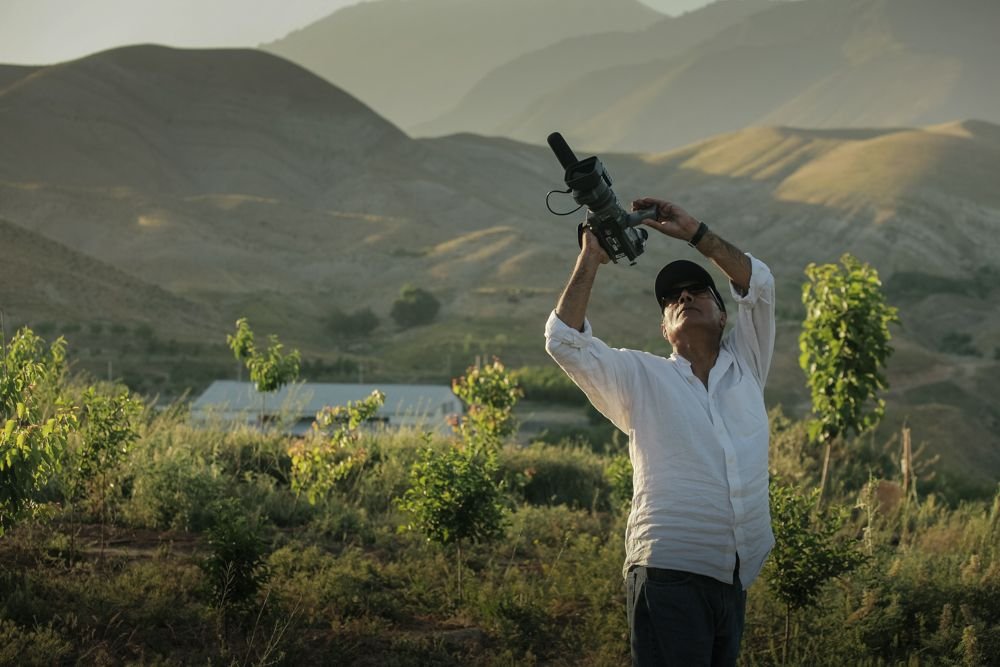
The implication of the filmmaking process is similarly considered by Abbas Kiarostami in the series of films now colloquially known as “The Koker Trilogy.” Though the films aren’t conventionally linked in story, they nonetheless ripple off each other like stones thrown across a lake. It goes like this: In 1987, Kiarostami releases Where is The Friend’s House?, which catapults him into international recognition. The film, typical of the first Iranian New Wave which presented as heavily influenced by Italian Neo-Realism, catalogs the journey of a young boy who is seeking out a classmate in another village because he has accidentally taken his workbook home. Then, in 1990, the Manjii-Rudbar earthquake killed somewhere between 35-45,000 people and, Kiarostami, wondering if his two former co-stars were still alive, tells his producer about his concern, which then becomes the semi-fictional And Life Goes On (1992), where an unnamed director (Farhad Kheradmand), clearly acting as a proxy for Kiarostami, drives to Koker and searches for the young boys who starred in his previous film. In that film, The Director (as he is surreptitiously credited) talks to a young man who has, in spite of the earthquake having killed some sixty members of his family, gotten newly married not five days prior. The trilogy then concludes with an exploration of that one scene, blown-up like a large scale photograph, in Through the Olive Trees (1992), where Mohammad Ali Keshavarz plays a director (but with his own name, yet standing in again for Kiarostami), making a film about which we don’t quite know, but which centers the love story we had seen in the film prior.

Through the Olive Trees begins with Keshavarz announcing his role as the director directly to the camera, in a similar manner to Varda’s The Beaches of Agnès (2008). Though the latter is a documentary, the opening line by Varda casts a pallor of metaphysical playfulness. Just as Lions Love contains within it a multi-layered, serpentine version of reality and fiction, Through the Olive Trees’ self-reflexivity flips constantly between the fiction itself and our omniscient view of the entire enterprise. There is the behind-the-scenes “documentary” of Keshavarz’s film, the fictional narrative of the film itself, and the revelation later of the film-within-the-film that Keshavarz is filming that was seen previously in And Life Goes On.

 Keshavarz is there to cast a local actress for his film, so he goes around a swarm of young girls asking their names and where they’re from. All of the locals are using their real names, so their existence penetrates the typical walls we assume exist for fiction - of which this is one. Except that the fiction we are first presented with is actually a pseudo behind-the-scenes documentary, or at least that is what seems to be announced by Keshavarz’s self-acknowledgement as a director within the film. But this framework is almost immediately subverted in the following scene as a faceless woman picks up an actor off the side of the road who had appeared in Where is the Friend’s House? What fiction is this? She asks him if he’s been able to procure chalk for the film’s slate, to which he asks, is that “like what I saw in Where is the Friend’s House?” Thus Kiarostami self-reflexively illuminates not just his own involvement and career, but the apparatuses of filmmaking itself, punctuated by the man asking Mrs. Shiva if he can have a role in the film. But what film? Through the Olive Trees? Or is it Keshavarz’s film? Is there a difference? Does it matter?

What much of this plays at, between both Varda and Kiarostami, is a direct contradiction of David Bordwell’s theories around cinematic continuity. Bordwell’s 1985 study on editing was centered on the classic Hollywood tradition of obscuring the apparatus to create a sense of harmony and thus perpetuate the fiction that what’s happening on screen is real. But Varda and Kiarostami both swing the Brechtian pendulum as far as it can plausibly go in the opposite direction in a counterintuitive attempt at a “deeper truth,” or, as Kiarostami himself said, “The most important thing is how we make use of a string of lies to arrive at a greater truth. Lives which are not real, but which are true in some way.” Though Kiarostami and Varda’s films, at least before the advent of the digital camera, adhere to a fairly strict Bazinian realism, they also make use of several Brechtian principles of self-reflexivity, particularly the “rejection of voyeurism and the fourth-wall convention.”

Through the Olive Trees is, however, not quite as simple as a self-reflexive meditation on the films that precede it, as actors and scenarios change ever so slightly. Though the house being filmed at and the main players are the same, the costumes have been altered in barely noticeable details - in this case the dress the young woman wears. Like a game of telephone, the further away we get from the source, the flimsier our grasp is on the story’s authenticity. The house, for example, does not actually belong to the old woman who “lives” there now; Kiarostami himself mentions this himself, but we’ve also seen it occupied by another actor in And Life Goes On. So the insistence on material reality is barely consistent. The sense of realism always remains the same, but because this is clearly not their house we get a stranger, more complex take on what “truth” is.  Adding to this complexity is the presence of Ahmad and Babak from Where is the Friend’s House? who sit behind the crew to watch the filming take place - except no one, least of all Keshavarz as Kiarostami, acknowledges their presence.

Kiarostami continues to call out the artifice of filmmaking when filming finally begins on the scene we’ve seen in the previous film. The Director, still played by Farhad Kheradmand as in And Life Goes On, appears on screen and thus reveals the preceding film even further as a fiction. Now here, he must act against a young man who can’t say his lines because of a stammer and must be recast. When he finally is, Hossein (Hossein Rezai) and The Director go through an endless amount of takes in a lightly comic behind-the-scenes sequence reminiscent of François Truffaut’s Day for Night (1973). This seemingly banal re-casting illustrates a larger modus operandi for Kiarostami in that it deliberately calls out the inherent artificiality of filmmaking by telling us this is the actor’s real house while clearly casting someone foreign to the area. In this sense the “deeper truth” can only be achieved through the use of another actor because, pragmatically, the actor that “does” live there cannot speak in front of others without a debilitating stutter. Instead, a different truth altogether is brought to the fore, which is that Hossein’s real, off-camera romantic troubles with the young woman playing his wife has been recreated by Kiarostami for his own purposes. It is also a subversion of his own film because the young couple’s union in the face of incalculable loss is presented as a facsimile for Koker’s fortitude in And Life Goes On, while in Through the Olive Trees it is the main inhibitory factor preventing Keshavarz’s film from being a smooth operation. 

Hossein has trouble getting his lines right, and, in between these repetitive acting mistakes by both him and The Director are small interactions between Keshavarz and his skeleton crew, amongst which is fellow Iranian New Wave director Jafar Panahi playing himself, but Kiarostami is only just beginning to peel back layers of perceptive reality. In the following segment, we witness a particularly strange temporal shift, as Keshavarz drives Hossein to the site of the memory he’s previously relayed. Now reliving it for the camera, Hossein chases after his paramour’s grandmother to beg for permission to marry. But we then hear a crew member yell “cut,” and the reveal is that it’s not Keshavarz’s set, it’s Kiarostami’s set, as he’s briefly seen through the olive trees, like Varda in the reflection of a mirror. So all of this action with Hossein, we’re led to believe, was happening just beyond the scenes of And Life Goes On. This head-scratching moment, in which Kiarostami, Keshavarz and The Director are all visible with multiple camera crews, raises yet another possibility. Keshavarz is not a stand-in for Kiarostami but rather another director entirely, who is shooting his own film which resembles Kiarostami’s work and which happens to use certain actors and elements of the real-life person.

Kiarostami himself was very ambivalent about “reality versus fiction,” but whatever the case the film only moderately touches on these various segmentations afterwards. Instead, in the middle of the film, Kiarostami presents a sort of thesis scene for the Koker Trilogy. As Keshavarz goes on a morning stroll with The Director near cast and crew camp, he tells Farhad he can communicate with the souls of the valley but he must do it loudly so they can hear. He does, laughs and says it's just an echo. The film itself, an echo in a valley of physical and spiritual devastation, becomes a reflection to this conversation about death and the lastingness of lost souls. What’s ultimately so fascinating about the entire film is that it has these markers of the audience’s base reality (mentions of Kiarostami’s previous films, actors playing themselves or roles they’ve played before, Jafar Panahi playing himself which is especially anchored in our timeline, as he is the AD for Kiarostami), but then trickles out into an ever-expanding universe of artificiality that pulls further and further away from itself, like a vast expanse of unexplored and constantly expanding space.

In a live interview conducted by film programmer Peter Scarlet in 2015, Kiarostami expresses a wish that conversations around his films would go beyond cinema, directing and acting. In other words, who cares if it’s “real” or not? Similarly to Varda in Lions Love, Kiarostami isn't self-referential for self-referentiality’s sake. In fact this was expressly not his intention, because he didn’t want to “repeat” himself with what he had done in Close-Up (1990), but instead simply wanted to tell the fuller love story from And Life Goes On and believed this method to be “the best way.” But even if deliberate self-referentiality was not Kiarostami’s intention, one film becomes the “fictional motif for the next” in a constant, pendulum-like overarching apparatus that swings between documentary and fiction.

As Jamsheed Akrami suggests, Close-Up and Through the Olive Trees mark turning points where Kiarostami goes from using cinema to reproduce reality to using cinema to manipulate reality. And this intention to do so is aided tremendously for both Varda and Kiarostami with the advent of the digital camera. The former first used it as a reawakening tool in the revelatory The Gleaners and I (2000), while the latter did in a total upending of his own fiction at the end of the Palme D’Or winning Taste of Cherry (1997). For Varda, as she explains within her documentary, the camera’s “effects are stroboscopic, narcissistic, even hyperrealistic.” It allows her to capture (and keep) happy little accidents, like a moment when she forgot her camera was on and thus inadvertently films the lens cap doing a little dance, which she then scores to a jaunty tune. This moment is oddly similar to Kiarostami’s ending of 10 on Ten (2004), a paratextual documentary to Ten (2002), in which the director lets his digital camcorder dangle towards a pile of ants. Varda links digital cinema with new horizons in finding absences, as well as herself. She discusses filming her left hand with her right hand, and plays games while driving in the car and using her right hand to “capture” semi-trucks. Meanwhile, Kiarostami took a camcorder on a research trip in Uganda for his first film outside of Iran, the sober ABC Africa (2001), in which a plenitude of incidental footage became the documentary itself, including seemingly mundane conversations over the music playing in a taxi or a rash of school children dancing in an alley. While there isn’t anything necessarily here that relies on the camcorder that Varda or Kiarostami could not have done with 16mm or 35mm cameras, it is the possibility that anything can be filmed and hard choices need not be made. For both Varda and Kiarostami, digital cinema meant the realization of a long-held maxim that everything is cinema, or, as Varda says at the end of The Beaches of Agnès: “cinema is my home. It’s where I’ve always lived.”

Digital cinema also seemed to allow both filmmakers to work even more independently. In the same self-reflexive documentary, Kiarostami says that, “this camera allows artists to work alone again” and, thanks to this creative independence, it is “an invitation to new discoveries” and experimentation “free from capital.” In the similarly meditative behind-the-scenes Around Five (2005), Kiarostami explains about his process that he would switch his camera on and “go to sleep.” Varda meanwhile agrees in her final film Varda by Agnès (2019) that the digital camera meant a divestment from traditional crews and thus a freeing of the fear of “intimidating the subjects” of her documentaries. The point for both seems to be the removal of the artist from the process, turning themselves into active spectators in much the same way Kiarostami suggests the audience fills in the gaps of the narrative. The question seems to be: how much can we let nature speak for itself? Following Robert Stam’s suggestion that “it is a mistake, first of all, to regard reflexivity and realism as necessarily antithetical terms” and Jonathan Sterne’s argument that “[higher] definition is not realism, and realism is not reality,” we might consider how Varda and Kiarostami’s use of the digital camera doesn’t replicate realism more forcefully than it had before but does allow them to film more, and thus a wider breadth of reality.

This desire to strip down the filmmaking process so that subjects and themes appear to represent themselves is counterintuitively realized by both through a massive interlocking system of interpolating mechanisms. Varda explained this process early on as cinécriture, a portmanteau of cinema and écriture (writing) that effectively categorizes herself as an all-seeing, all-controlling artist. As Robert Stam explains, 

In the postwar period in France, both film and literary discourse came to gravitate around such concepts as ‘authorship,’ ‘écriture,’ and ‘textuality.’ The New wave directors’ fondness for the scriptural metaphor was scarcely surprising, given that many of them began as film journalists who saw writing articles and making films as simply two variant forms of expression.” (p. 6)

While Kiarostami did not coin a word to describe his status as auteur, he did, apparently without much previous knowledge of European cinema or the notion of the camera-stylo that Alexandre Astruc first referenced, say that, for him, “the camera is exactly the same as a pen. It can be used by a common person or it can be used by Baudelaire to create a great poem.” Kiarostami’s invocation of the French poet and essayist further reminds oneself of Walter Benjamin’s observations on Proust’s theory of mémoire involontaire, in which the “former concludes that ‘the past’ is somewhere beyond the reach of the intellect and unmistakably present in some material object.” That material object, in this case, is the photograph. 

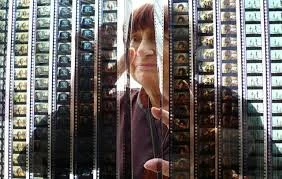
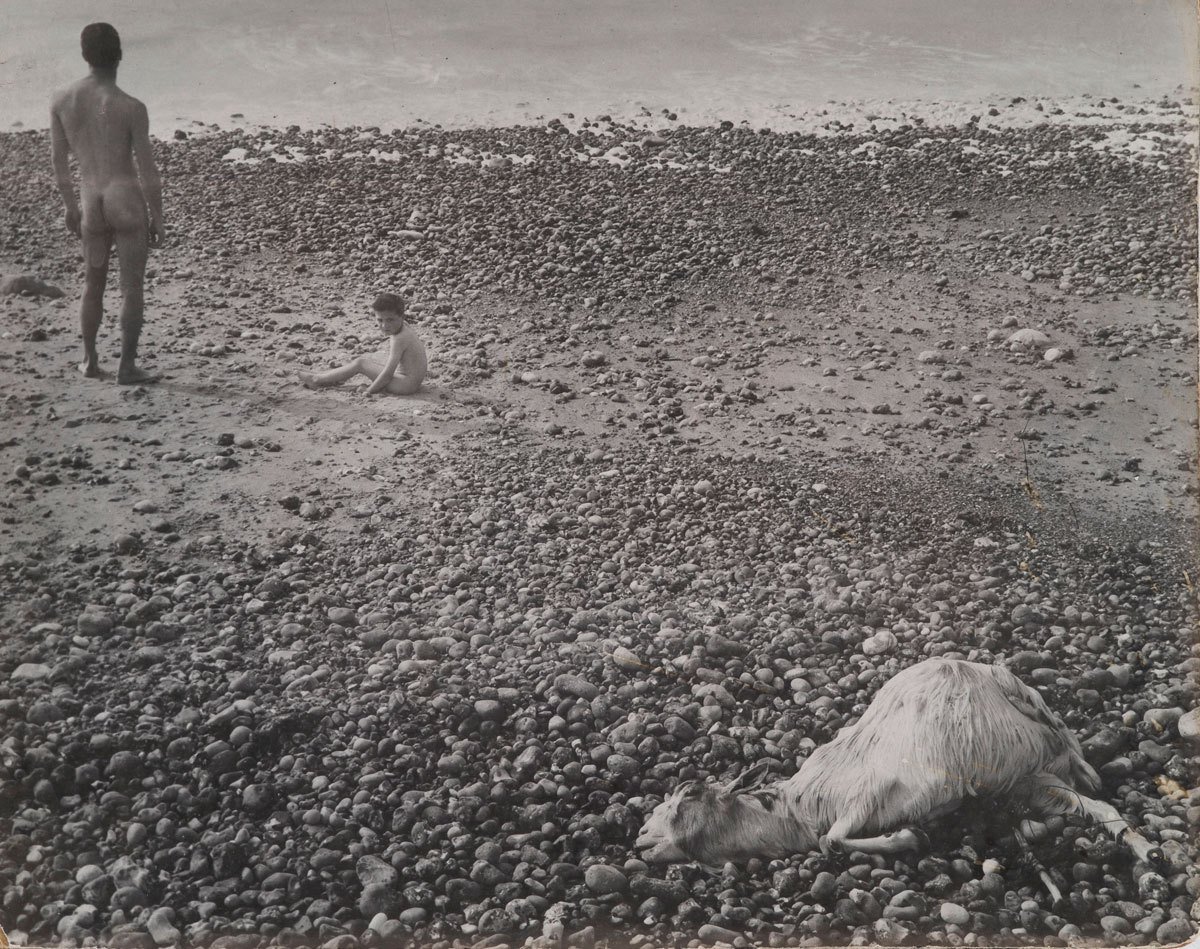
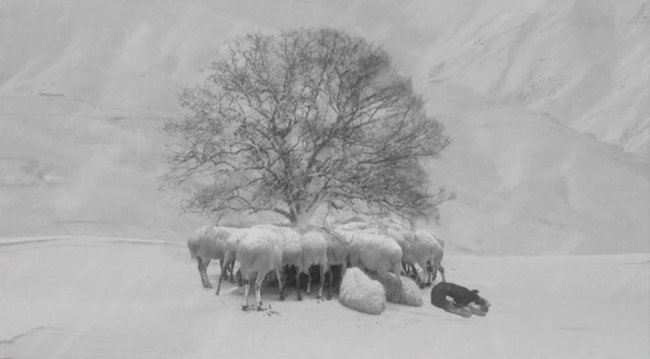
Both Varda and Kiarostami came to filmmaking without any previous cinephilia and instead, in its place, a deep reserve of appreciation for photography. For Varda this photographic preference is constantly imbricated on her cinema instead of incorporated within it, creating a filmmaking style that resembles a graphic tableau. Both filmmakers were expressly intrigued in the photograph as a material object of memory whose status as a document of historical fixity should be inherently questioned. Varda summed up this artistic credo in Varda by Agnès in a reflection on her installation Quelques veuves de Noirmoutier (2006, created for Fondation Cartier in Paris) by asking, “What happened before and after a snapshot was taken? Or in a film, what happens when they exit the frame?” This same consideration became Abbas Kiarostami’s final, posthumously released film, 24 Frames (2017), in which the artist partially animated twenty-four photographs to imagine the minimalist action that might’ve taken place on either side of its fixed place in history. Both artists seem to be following Michel de Montaigne’s philosophy of the self, which “can be summed up by the phrase ‘que sais-je’ (What do I know?), which reveals that any investigation of society is concomitantly an investigation of one’s own relationship to that society.” For Varda this consideration is most profoundly felt in the short documentary, Ulysse (1983), in which she implores herself and the subjects of a photograph she took some thirty years prior to remember their involvement.

Ulysse, 1954. Photograph by Agnès Varda. Courtesy of Mubi

Still from 24 Frames, 2017. Photograph by Abbas Kiarostami. Courtesy of Criterion.


In a scene in which Varda shows the photograph to the now grown man (Ulysse Llorca, whose name gave the photograph and the film its title), the two cannot agree on the circumstances that led to its mysterious finish. He cannot remember even taking the photograph at all, while Varda, confounded, probes him to try: 

Varda: “I mean, for you this picture is fictitious. It’s real, but not for you. You must imagine your childhood. It’s one version of the facts, my version.” 

Ulysse: “Each person has their own story, after all. Even if it’s a strange one, between reality and fiction.”

This cognitive dissonance between the fixity of a photographic memory and that of the morphic memory as it changes naturally with age crescendos over the course of Varda’s career to the inevitable point where she is recreating scenes from her own childhood in The Beaches of Agnès (“Memories are like flies swarming through the air, bits of memory, jumbled up.”) or, earlier, when she makes Elsa Triolet and Louis Aragon reenact the moment of their first meeting in the short Elsa la Rose (1966). Varda plays with all of these techniques most jarringly in Documenteur (1981), in which Sabine Mamou, Varda’s frequent editor, is so entrenched as the filmmaker’s proxy that Varda announces her as such in the opening scene voiceover and has Mamou, in a particularly surreal scene, record some of the voiceover from Varda’s documentary Mur Murs (1981), which preceded it - except that when we hear the playback, it’s Varda’s voice and not Mamou’s. As a whole the film plays with semantic and physical abstraction: the multiple meanings of words and phrases, multiple meanings of identity, of memories, in what Roland Barthes labels an “anchorage” of thought, whereby “text is used to focus on one of these meanings, or at least to direct the viewer through the maze of possible meanings in some way.” That it takes place in the backdrop of the notoriously transient Venice Beach, California emphasizes the fluidity of these ideas, compounded by the inescapable fact that Mamou and Varda sound quite similar. 

Of course there is some distinction to be made between documentary, in which the presence of the filmmaker might be expected, and fiction (of which Documenteur purports to be) where the same presence is not. But Varda and Kiarostami treat both genres the same, and no hybrid is as cheekily complex as Kiarostami’s Close-Up (1990). While it is outside the bounds of this essay to fully dissect a text as dense as Kiarostami’s most celebrated work, it is useful here in particular as a rumination on his inherent belief that the delineation between the “real” and the “fake” is conclusively irrelevant in ontological discussions of veracity. Additionally, as Godfrey Cheshire argues, the film is a useful tie between the first Iranian New Wave, with its emphasis on the social reflectionary style of Italian Neorealism, and the second Iranian New Wave, which this film helped usher in, and which hybridizes that style with the influence of the French New Wave. Briefly, the film reconstructs the strange story of Hossein Sabzian, a lower-class man who was arrested for fraudulently posing as famed Iranian director Mohsen Makhmalbaf in order to, apparently, ingratiate himself into the lives of a well-to-do family. What starts off as simple enough fiction becomes a multi-layered tapestry in which no moment is immediately identifiable as documentary or recreation.  As a point of comparison we might consider Varda’s Jane B. par Agnès V. (1988), itself ostensibly a documentary about the actress and singer Jane Birkin’s reflections on turning 40. While other famously self-reflexive films like Wild Strawberries (Ingmar Bergman, 1957), 8 ½ (Federico Fellini, 1963), Day for Night (François Truffaut, 1970) and Synecdoche, New York (Charlie Kaufman, 2008) vacillate between different modes of fiction, Close-Up and Jane B. par Agnès V. vacillate between different modes of reality. In other words, there is an impossibility in ever quite determining what has been captured by traditional modes of documentary filmmaking and what has been theatrically recreated (without reading about Kiarostami or Varda’s process). But even then you wouldn’t get the full veracity, as Kiarostami mentions that, even though “everything has been recreated as faithfully as possible,” everyone had a “different interpretation of reality.” In Varda’s film Birkin tells the camera she wants to “show herself as she really is” but then wonders, with Varda, what the nature of documentary is in this context when everything is restaged. Kiarostami’s quote about his film, that, “ultimately what the film is dealing with is the difference between the ‘ideal self’ and the ‘real self’” could easily be applied to Varda’s film in which Birkin reimagines herself as a subject of classical painting reincarnated, or in the context of film roles she never got to play (like Joan of Arc, or more self-reflexively, the as-yet filmed mother in Kung-Fu Master! which got made in the midst of the documentary). In the place of a firm temporality, Kiarostami offers a segmented narrative that, quite Varda-like, employs a cornucopia of material: “real” images that have possibly been manipulated, reconstructed documentary-like takes, interviews, Rashomon-like flashbacks from different angles and perspectives, and dead-time scenes that might have otherwise been cast aside during a final edit. Varda, similarly to Kiarostami, acknowledges her own presence in mirror reflections, a disembodied voice over, hands-on adjustments and on-camera two-shot interviews with Birkin. Hamid Dabashi argues that Close-Up “forces us to think about the fictive transparency of the real,” while Varda herself says of Jane B. par Agnès V. that “we played at the false to get at the real.” When Birkin slowly confesses to her dreams as Varda pushes the camera in to reveal herself just beyond Birkin’s shoulder to form a single image, one is reminded of Kiarostami’s first visit with Sabzian, filmed voyeuristically in a molasses-like zoom from just outside the prison windows.
Strange as their connection might initially seem based on the sheen of their idiosyncratic styles that made them equally influential, the differences between the two starts and ends there. Varda and Kiarostami’s ultimate mission was in a shared desire to reveal larger idiomatic humanistic truths via a dissolution of reality’s boundaries. Nico Baumbach argues that all of Kiarostami’s films are fueled by “some form of dissimulation,” a process in which the constant depravity of information outside the frame ironically allows the viewer to fill in the narrative gaps, and it is here, where both of their massive bodies of work intersect. “Cinema is just a game,” a sentiment uttered by both filmmakers at different times, emphasizing play that makes their connection so intriguing; a connection as unambiguous as the tragedy of their mutual fate under the thumb of cancer. Both filmmakers saw self-reflexivity not simply as an intriguing intellectual and artistic experiment but as a tool of solidarity in action. Whether it was Varda, ingratiating herself with her documentary subjects to such a degree that she is literally enveloped by the walls, as in Daguerreotypes (1976), or, most notably of all, Kiarostami in Close-Up, fulfilling Sabzian’s wish: 

“Please make a film about my suffering.”

“I will try.”


Works Cited

Alter, Nora M. Chris Marker. University of Illinois Press, 2006. 

Appadurai, Arjun, and Neta Alexander. “Chapter 3: Failure, Forgotten: On Buffering, Latency, and the Monetization of Waiting.” Failure, Polity Press, Cambridge, UK, 2020, pp. 89–90. 

Astruc, Alexandre. “The Birth Of A New Avant-Garde: La Camera-Stylo.” L'Écran-Française, 30 Mar. 1948.

Barthes, Roland, and Stephen Heath. “The Rhetoric of the Image.” Image, Music, Text: Essays, Hill and Wang, New York, NY, 2007, pp. 32–51. 

Baumbach, Nico. “On Likeness.” Criterion Blu-Ray, "Like Someone in Love", 2014. 

Benbrahim, Tarik. “Abbas Kiarostami on CLOSE-UP.” Criterion Channel, 2009.

Labuza, Peter. “The Harmony of Agnès Varda and Jane Birkin.” The Film Stage, 31 Mar. 2017, https://thefilmstage.com/the-harmony-of-agnes-varda-and-jane-birkin. 

Elena, Alberto. The Cinema of Abbas Kiarostami. Translated by Belinda Coombes, Saqi, 2005. 

Limosin, Jean-Pierre, director. Abbas Kiarostami: Truths and Illusions. La Sept-Arte, 1994. 

MacFarquhar, Larissa. “The Movie Lover.” The New Yorker, 12 Oct. 2003. 

Neupert, Richard John. A History of the French New Wave. University of Wisconsin Press, 2007. 

Oubiña, David. “Algunas Reflexiones Sobre El Plano En Un Film De Un Cineasta Iraní.” Translated by Belinda Coombes, Punto De Vista, Dec. 1997, pp. 20–25. 

Roberti, Bruno. Abbas Kiarostami. D. Audino, 1996. 

Smith, Alison. Agnès Varda. Manchester University Press, 1998. 

Stam, Robert. “The Presence of Brecht.” Film Theory: An Introduction, John Wiley & Sons, Incorporated, Somerset, NJ, 2017.

Sterne, Jonathan. “Compression: A Loose History.” Signal Traffic: Critical Studies of Media Infrastructures, edited by Lisa Parks and Nicole Starosielski, University of Illinois Press, Urbana, IL, 2015, pp. 31–48.

Comment

Image courtesy of The Wrap

Our Bear From Peru: Considering Paddington 2's Critical Ascendancy

October 27, 2021

The full text of this essay first appeared in print for The Servant, based out of Baltimore.

“Paddington is voiced by Ben Wishaw and sounds like a member of some indie-pop band coming down from an agonising ketamine high, and that’s just the start of what’s wrong in Paul King’s film.” 

So begins Eddie Harrison’s strangely vindictive take-down for Film Authority of the beloved 2017 film Paddington 2. The partly-animated live-action sequel had only one month of enjoying the rarified air as the “best-reviewed movie of all time,” at least according to the review aggregator Rotten Tomatoes, before Harrison decided enough was enough and skewered the lovable little bear for not fitting his childhood memory. 

“This is not my Paddington Bear,” continued Harrison, “but a sinister, malevolent imposter who should be shot into space, or nuked from space at the first opportunity. Over-confident, snide and sullen, this manky-looking bear bears little relation to the classic character, and viewers should be warned; this ain’t yo mamma’s Paddington bear, and it won’t be yours either.” 

…

Taking down Harrison’s bizarrely puerile and frankly terribly written review would be easy, but besides the point. The question of whether or not Paddington 2 really is the “greatest” film of all time is pointless—no art should be qualified by the amount of positive reviews it receives, but when anybody can submit a review to Letterboxd or post in the comments section of iMDB, how—and when—do we stop counting? 

Months after Paddington 2 was released, Martin Scorsese wrote an op-ed for The Hollywood Reporter in which he argued that aggregators like Rotten Tomatoes and MetaCritic were more harmful than good, robotic behemoths that place artistic merit in an unfair binary of “rotten” or “fresh” and compound a studio’s anxieties and fixations on opening weekend grosses. 

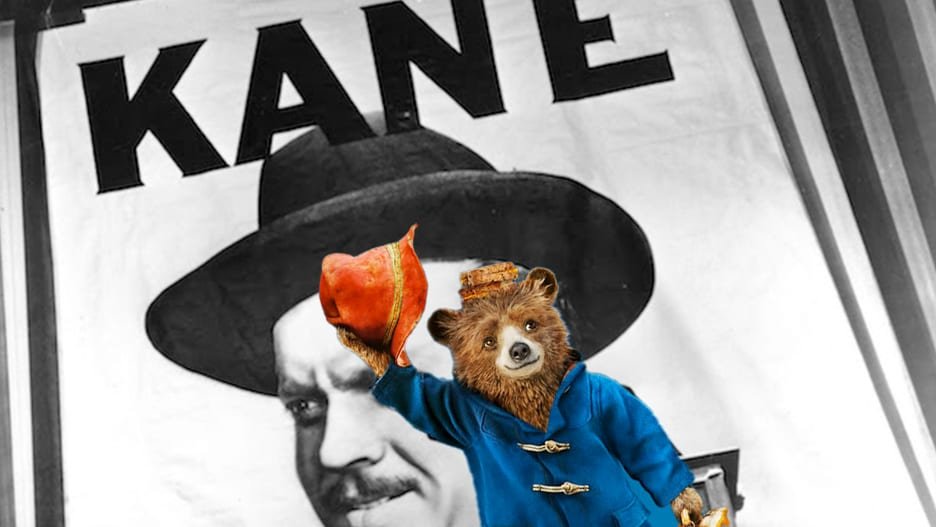
He was right, but more to the point, what even qualifies a good review versus a bad review? Eddie Harrison’s savage piece on Paddington 2 notwithstanding, most professional critics are a bit more nuanced. Still, when the online magazine Uproxx tweeted about Paddington 2’s ascendancy past Citizen Kane, the Museum of Moving Image quote-tweeted it with a photoshopped image of Paddington Brown’s face on Charles Foster Kane’s campaign poster so that it looked like the film’s eponymous auteur and star was gesturing towards the new future of greatness: a tiny Peruvian bear in a blue raincoat and Indiana Jones-style fedora. 

When this bit of silliness shook the internet, I couldn’t stop muttering to people, half-ironically, that the Paddington films really are the greatest. Are they actually? Probably not, but again the question is superfluous and irrelevant. I don’t know if Paddington really deserves to be considered amongst Citizen Kane, or The Godfather, or Satantango, or Parasite (which currently sits atop Letterboxd’s user-generated best films list), but if Studio Ghibli’s animated masterpieces like Spirited Away and Kiki’s Delivery Service can be included in such rankings, why shouldn’t Paddington 2? I wasn’t arguing for its place in the pantheon, but that the tiny bear was a symbol of an idyllic utopia many of us pine for. Paddington is a rebuke of imperialist and colonialist attitudes of the West and a new template for social harmony. 

In the first film, King immediately introduces us to Paddington’s adoptive parents. Aunt Lucy and Uncle Pastuzo are living in “Darkest Peru” and have been discovered by an explorer who names them after his deceased mother and an eccentric “boxer I once met in a pub.” They raise the as-yet unnamed Paddington as their own and teach him that people can be changed simply by osmosis. In the second film this philosophy is expressed mostly through Paddington’s frequent quoting of his aunt: “Be kind and polite, and all will be right.” They learn their morality via a four-decades old London Tourist guide on a vinyl record that they play repeatedly, practicing some two hundred different idiomatic ways to say that it’s raining in English. They find fulfillment through the sharing of experiences and feelings and take everything at face value; in the original television series (created by the late Michael Bond), Paddington’s inability to understand sarcasm or idiosyncrasies provided the central tension for nearly every episode. One particularly endearing moment of this happens when Paddington, in the London Underground for the first time, sees a sign that says, “dogs must be carried” when going down an escalator. The bear does what anyone would do in that situation: he finds a tiny chihuahua and carries it down. 

The franchise’s politics find their footing in a tiny bear proxy for refugees traveling north in search of a better life. Aunt Lucy insists to Paddington that Britons will not have forgotten how to be kind to strangers, and the film lets us sit in this fantasy, allowing us to imagine a world in which borders don’t exist and xenophobic paranoia is stuck at the fringes. Racism doesn’t not exist in Paddington—Windsor Gardens, where the Browns live, has at least one comically racist neighbor in the form of Peter Capaldi’s Reginald Curry—but that ignorance is simply the purview of wily cowards who too can be changed. Whether or not you think that’s naive is one thing, but remember that this is also a universe in which Peruvian bears can learn how to speak the King’s English and no one blinks an eye. 

King wastes no time showing us Paddington’s inherent goodness. When he first arrives in London, Paddington camps out on the side of the train tracks. Unlikely to get food or shelter, he gives his last “emergency” marmalade sandwich to a pack of hungry pigeons. And this little bit of generosity is rewarded both to us and to the bear; in the former through narrative causality that Spielberg himself couldn’t dream of and in the latter as the pigeons end up being instrumental in saving Paddington from the deliciously evil Nicole Kidman. Good karma for those who deserve it. 

It is this constant domino effect of goodness that makes the heart of King’s two films pound. In Paddington 2, the bear’s good nature and selflessness is able to transform an entire prison into what is essentially England’s largest fine bakery. Three of the prisoners (spearheaded by Brendan Gleeson’s lovable performance as a tough but comically vulnerable prison boss named Nuckles McGinty), give up their newfound freedom to help Paddington out of an underwater cage. Back home in Windsor Gardens, Paddington’s presence only elevates everyone’s lives. One neighbor would constantly forget his keys at home were it not for Paddington’s care, another would constantly be angry and depressed were it not for Paddington’s homemade marmalade, and two others find each other (and love) because of Paddington’s selflessness as a window washer (it’s a long story). There’s also the moment when Paddington witnesses a pickpocket drop a wallet; Paddington can’t fathom a world where thieves exist so he chases the man down to give the wallet back. 

Most lasting change cannot happen at the individual level. But King knows that and doesn’t shy away from criticizing bad systems and actors who still govern his bear’s world. In the first film, before the Browns have fully accepted Paddington as a member of their family, Mr. Brown tries to explain where refugees go. He tells Paddington that most people find the place of someone they know, and Paddington replies: “What if you don’t know anybody?” Mr. Brown pauses, for a moment unsure what to say.

The whole series has a general distrust of institutional help, as when Mr. Brown calls an unknown-to-us government office and is told, “your call is moderately important to us.” Capaldi’s character Mr. Curry in the first film is simply a nosey xenophobe who tells the Browns he doesn’t want to hear Paddington’s “jungle” music, but in the second he’s evolved into... a cop. It can’t be an accident that King’s most obviously racist character is a police officer. 

Paul King even reserves some criticism for ingrained colonialist attitudes. The Geographer’s Guild of the first film is horrified to learn that Montgomery Clyde, the explorer who found the bears, refused to bring the natives back with him. “These were no dumb beasts,” Clyde says in defense, “they were intelligent and civilized.” They respond, cruelly and hilariously, “Come off it, Clyde. They didn’t even speak English. Did they play cricket? Drink tea? Do the crossword? Pretty rum idea of civilization you’ve got, Clyde.” This scene makes it obvious that white supremacists want the whole world, even the global south, to live like them.

One area in which the Paddington films are under-appreciated is gender politics. Both films include comedian Simon Farnaby as a self-serious security guard named Barry who’s sexual attraction to middle-aged men in traditionally female clothing is presented without judgement. The comedy of those scenes come not from his attraction but in his blindness to the men behind the disguises. Bonneville’s Mr. Brown is a somewhat stiff man and feels uncomfortable in a woman’s clothing, but Paddington quite simply tells him, “you look very pretty.” Why should a bear have gender-based prejudice? Even Mr. Brown is forced to admit later when talking to his family that wearing women’s clothing was “very liberating.” 

Along with his surprisingly astute politics, King’s wildly good on a formal level. Throughout both films, King pays homage to Michael Bond’s original literature by letting the camera travel on horizontal planes, introducing minor interstitials and side scenes in cross-sectioned monochromatic colors reminiscent of a children’s book. There are also nods to international cinema, like Tom Cruise’s suction-cup climb in Brian De Palma’s Mission: Impossible (1996), or the unusually red parasol akin to Jacques Demy’s The Umbrellas of Cherbourg (1964). King takes opportunities to bend the rules of space and time, like when he seamlessly brings us from our world into that of the pop-up book, showing us Paddington’s fantasy of ushering his beloved aunt around London. Then, later in prison, he plunges us into the lush Peruvian forest that only actually exists in the Paddington’s head. 

None of this even takes into account the film’s first-rate comedy. There’s an exceptional moment in the first film when Mary Brown (played by the always luminescent Sally Hawkins) is reporting Paddington as missing to the police. She describes him as “three foot six, red hat, blue coat and... well, he’s a bear.” The police officer simply replies, “Well it’s not much to go on.” Mary: “... really?!” 

Or how about the comedy in the entirety of Hugh Grant’s villainous performance of the second film? Grant’s turn is the best of his career, an absurdly self-congratulatory and hammy fading actor who steals the magical pop-up book because it leads to a treasure he hopes will fund his solo show. To repeat: he’s a villain who’s entire plan is to fund a solo show. Maybe the silliest motivation for a villain in the history of cinema. 

If Paddington exists in a utopia in which most people have good intentions and even bad people have intentions that are adorably small minded, then it is also a world where circumstances and luck play large roles in the balance of justice. That Paddington is sent away for ten years in the second film for “Grand Theft” of a pop-up book is a hilariously cruel fate—but it allows us to see how Paddington and Aunt Lucy’s ethos of good manners above all else fare against its toughest competition: the prison industrial complex. It’d be a lot to assume a children’s movie could be abolitionist against police and prisons, but at the very least King does give us an image of prisoners who are only there because of mistakes, bad luck, and ingrained systematic cruelty—just like Paddington. In these instances, kindness can be the most effective salvo. This idea pervades every element of the production. Both films are accompanied by a delightful jam band that appears on screen and sings lyrics like, “life will be easier/ time will be breezier/ if you love your neighbor.” 

Paddington resonates for people because he exists in a universe devoid of cynicism. Individual differentiation is appreciated, people can be helped simply by magnanimity, communities can exist via radical solidarity, capital gain is an inherently selfish endeavor, and goodness begets goodness. The Paddington movies aren’t just gooey reflections on home life, they are templates for community health and prosperity. Paddington, a refugee who only seeks happiness, friendship, and family as his vocations, inspires those around him to cultivate artistic passions, find lasting romantic love, pursue healthy careers, and embrace their truest selves rather than hide beyond artificial facades. The movie’s emotional ending resonates in part because King brings all of the people Paddington has helped to the front of the frame. Here’s what can happen if you live your life justly. 

It would be enough of an enjoyable film if King had just told a simple story about a bear getting into hairy situations, but the synthesis of progressive politics with unquestionably affective pathos, told via first-rate animation and Chaplin-esque comedy, all through the prism of a refugee story, make Paddington and Paddington 2 top-tier contemporary cinema. Paddington teaches us that it's not only possible to treat others like our neighbors, but that it is imperative for our global survival. As Paddington says in a letter to his Aunt Lucy, “everyone is different, but that means anyone can fit in.” 

Who cares if Paddington 2 is the best film of all time? Just like his precious marmalade, the films contain all the vitamins and minerals we need. 

1 Comment
1*We0ecubaTlUQ5Foco5vAkg.jpeg

The Infrastructure of Power

June 17, 2021

This is an excerpt of a longer piece, which you can read on IfNotNow’s Medium

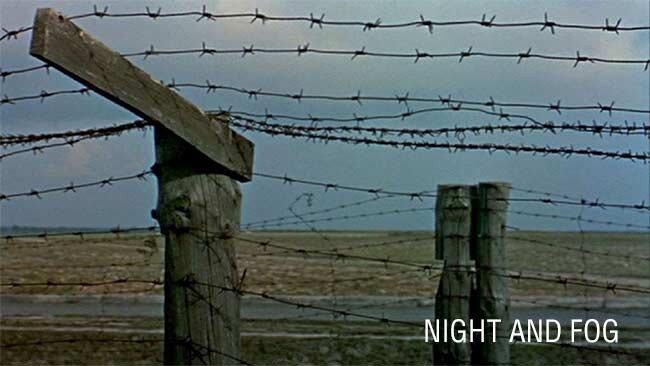
If you stripped away the context of its production, Night and Fog would be a movie about infrastructure. The seminal 1955 Holocaust documentary by Alain Resnais contains throughout its short but ghost-like thirty two minutes a haunting narration by Jean Cayrol (as spoken by actor Michel Bouquet), and most of it emphasizes the literal brick-laying that paves the path towards genocide and ethnic cleansing:

A concentration camp is built like a stadium or a hotel, with contractors, estimates, bids, and no doubt a bribe or two… architects calmly conceive of gates to be passed through only once.

Resnais shows us various aesthetic styles of camps, watchtowers conceived of and only limited by the creative whims and imaginations of the Nazi architects that dream them up. Certain camps, Cayrol explains, were designed around the passions of those SS officers that had the privilege of eccentricity: one was built around one of Heinrich Himmler’s prized oak trees, while another was built with the added accoutrement of a Joseph Goebbels’ greenhouse. Goebbels, who was one of the Third Reich’s chief propagandists, probably saw no irony in making the preservation of greenery a personal passion next door to an infamous death chamber, but Resnais was a skilled enough filmmaker to point at the cruelty without so much as saying so.

Night and Fog premiered sixty-five years ago out of competition at Cannes and ten years after the camps had been liberated. The questions then for Resnais remain the same for us now, in 2021: how did this happen, and what must be done to stop it from happening again? Resnais’ answer to both questions seems to rest in the investigation of the structures and objects that calmly and coolly allowed for 9 million people to be systematically slaughtered, 6 million of which were, of course, Jews. Amongst the architectural innovations are sound proof walls to silence the screams of the prisoners and group latrines at which, Cayrol’s narration tells us, short-lived plans of prisoner resistance were hatched and forgotten.

Then there is the infrastructure of propaganda, and of deceit. At Auschwitz, the infamous sign tells us that Arbeit Macht Frei (“Work Makes You Free”), while other camps feature equally deceptive slogans like Reinlichkeit ist Gesundheit (“Cleanliness is Health”) and Jedem Das Seine (“To Each His Due”). Is the latter a threat? A false hope? All of them read like magnanimously cruel and ironic versions of platitudinal inspiration, the kind seen in old doctor’s offices and school yards.

Those doctor’s offices are also part of the infrastructure of facade, as in a hospital at the camps that doesn’t heal but tortures and experiments; a brothel with no sex workers except malnourished slaves; and the trains that take unsuspecting Jews and more not to safety but to death, or worse:

The SS had built the semblance of a city with its own hospital, red-light and residential districts, and yes, even a prison… Nothing distinguished the gas chamber from a city block; Inside, a fake shower room welcomed the newcomers.

Resnais alternates between then and present day, tracing paths along empty grassy fields that have covered up the blood-soaked plains while cross-cutting with images of the worst of the atrocities. There is the infamous shot in which Resnais makes a pile of women’s hair look like an endless ocean and the more direct confrontations of survivors dragging the dead, malnourished bodies of their peers into mass graves on the day the camps were liberated; the SS officers, meanwhile, calmly clock out and head home, as if it is any other day. And what happens then? Hair is turned into cloth, bones into fertilizer, flesh into soap, skin into paper: the faux-architecture of renewal. Resnais removes any context from a striking close up of rolled up cloth, leaving the viewer to inevitably wonder if the same sadistic recycling could be in their home, too.

But Night and Fog is also a movie about memory, the ghosts of the past, and the harbingers of the ghosts of the future. Cayrol’s narration asks us about the “indifferent Autumn sky” before wondering why we walk these tracks at all. Why remind ourselves of the horrors of the past? Why do we even try to remember? The title comes from Adolf Hitler’s nacht und nebel directive to make political dissidents disappear, and in Resnais’ film of the same name an attempt is made to rescue those lost stories from behind the opaque filter of ignorance. Lingering over the entire film is a question of whether or not humanity has learned any lesson from such an incalculable tragedy. And the answer to that existentialism is found in the pieces of infrastructure that remain, tethered to abandoned camps no matter how many years pass. If you go to Majdanek, you are told that the camp is so well preserved it could be started up again in an instant, as long as someone has the political will and way. Here, in Night and Fog, empty and corroded steel ovens stand in brick casings as terrifying spectres of the crematoria they once were, minutes before Resnais shows us footage of a tractor plowing away piles of dead bodies to create a clear path; one object is a physical memorial, the other a transient memory.

“When Chekhov saw the long winter, he saw a winter bleak and dark and bereft of hope. Yet we know that winter is just another step in the cycle of life. But standing here among the people of Punxsutawney and basking in the warmth of their hearths an…

“When Chekhov saw the long winter, he saw a winter bleak and dark and bereft of hope. Yet we know that winter is just another step in the cycle of life. But standing here among the people of Punxsutawney and basking in the warmth of their hearths and hearts, I couldn't imagine a better fate than a long and lustrous winter.”

An Early Spring: Re-Examining Groundhog Day as a Roadmap

February 02, 2021 in film theory

Perhaps the most under-examined sequence in Harold Ramis’ Groundhog Day (1993) is the conversation between Phil, dryly and cynically played by Bill Murray, and two of Punxsutawney’s lowest citizens, Ralph & Gus. Camped out at the dive bar inside of a bowling alley, only a couple days into his repetitive predicament, Phil poses the question:

What would you do if you were stuck in one place and every day was exactly the same, and nothing that you did mattered?

Ralph, in a drunken but oddly clear stupor replies, “that about sums it up for me.” 

This minor moment in an otherwise fairly light-hearted comedy belies a global truth: that a repetitive, inescapable and disappointing life is a daily reality for a majority of the population. Representing a lower class are Ralph & Gus. Their station will never change. They are always struggling against the impenetrable wall of class division.

When COVID-19 first hit these shores, and lockdown went from a theoretical possibility to a living reality, movie theaters were closed as a matter of course. Dimly lit and poorly ventilated rooms in which hundreds of strangers chomp on buttery popcorn mere inches away from the next person hardly fit the bill as an essential business, and we all had to start turning our living rooms into premier cinemas.

One of the first films to be screened at drive-ins was, inevitably Groundhog Day. The romantic comedy with a sci-fi twist has had a lasting stay in our zeitgeist, even though the film, at the time, was seen as a major risk not worth trying. Ramis and the film’s star, Bill Murray, had trouble getting any funding until, suddenly, it was there. Once released, the film was a hit, and it’s perennial popularity only seems to grow. Why? The obvious answer is Bill Murray, and the 2020 answer was the film’s narrative about being stuck in the same day over, and over, and over (and over) again.

This last element of the film is overwhelmingly its most widespread influence. It’s also its most resonant part. Who in 2020 didn’t identify, especially in those early months, with the monotony of everyday life? It seems almost cute to think now that there was a moment we all shuddered at the mention of a two-week quarantine, which was what the initial lockdown was supposed to be. Now, as 2021 says goodbye to its first month, the repetitiveness is the rule. Murray’s Phil Connors, like us, is stuck in a never ending day in which the light of the next morning has become a near impossibility. We went from two weeks to “who knows” when the question of a return to a normal reality got brought up. A staycation turned into nightmarish levels of boredom and then into a morose resignation.

But, something else happened, too. In June, awakened once more by another brutal murder of a Black man at the hands of a police officer, many people took to the streets. In Los Angeles, a rising houselessness epidemic gave rise to a massive uptick in people suddenly interested in mutual aid. More recently, people stayed angry when a throng of far-right white nationalists tried to literally overthrow the government, even as the incoming President yelled out empty rhetoric about “healing divided wounds.” This last moment feels especially exciting, and is only possible because of an extended global trauma which has laid bare the morally hollow institutions that rule each of us. Wins in progressive action are scarce, so it feels doubly important to acknowledge that many people are getting involved in repairing a broken world for the first time.

Groundhog Day is, ostensibly, not a political movie. I’m sure Ramis and Murray would shudder at the suggestion. But, importantly, Connors does not move on with his life until he learns that community care, solidarity and a rejection of gluttony are more rewarding acts than material gain. Though it’s impossible to say exactly how long Connors stays stuck in his hell, the most conventional calculation puts it around a few years. Of those years, it feels equally difficult to calculate how long, or when, exactly, Connors went from being a self-serving, nihilistic, hedonistic asshole into a uniquely caring community liaison. But the change is what’s important, and Ramis is careful to show us that the change only happens once Connors has gone through the stages of stealing, self-loathing and perpetual suicide. In other words, Phil Connors does not reach salvation because he is promised a way out; he only reaches it because he starts caring about the people around him with no expectation of reward.

Much of us began watching Groundhog Day in 2020 when we simply needed a cinematic reflection of the monotonous box we suddenly found ourselves living in. Along with Steven Soderbergh’s Contagion (2011), the parallels seemed all too obvious. But the promise Groundhog Day offers is more important than its accidental mirror to a pandemic it could never have predicted. That promise, that we are only going to get out of this moment with a commitment to radical solidarity, feels especially resonant when much of the American electorate is coming to terms with the notion that fundamental change will never be brought on simply by voting for the other guy. It’s a promise worth fighting for.

For me, Groundhog Day has always occupied that space in my most affectionate films which entered into my consciousness first and foremost because of the comedic performance at its center. But on an unconscious level, it spoke to me as a film about the prison of mental health. On this last bit I cannot claim on behalf of Ramis any legitimate intention; I am, admittedly, projecting my own personal experiences onto a movie Ramis made because it was funny to him to think about what Murray would do with an endless amount of time. But film, and art more generally, is at its best when it hits an audience on the most personal of levels. As a teenage kid battling crippling social anxiety and suicidal ideation that nearly took my life, Groundhog Day spoke to me as a film about struggling to break free from one’s own circumstances. That meant a constant battle with my own brain; for Murray’s Phil Connors, that horror is physicalized, but the trauma is the same. When Phil tells Rita, his colleague and the woman he has inevitably fallen in love with, “I’ve died so many times, I barely even exist anymore,” I always feel a regretful tinge of envy.

I watch Groundhog Day at least once a year now, and I always feel the same odd sense of jealousy for Connors predicament. I honestly feel most days that I would adore living in a quaint snowy town in which I could do nothing but find avenues for self betterment. Connors learns how to play a virtuosic piano, picks up completely erudite artistic hobbies like ice sculpting, and becomes fluent in French by reading obscure 17th century poetry in a diner (speaking of diners: I love diners, unironically one of the more painful personal losses for me during this pandemic). Though I know this situation is tortuous for anyone, I cannot help but envy someone who’s world is suddenly and irrevocably shrunken. I subscribe to the theory of the Paradox of Choice put forth in 2004 by psychologist Barry Schwartz who argued that the minimizing of consumer choice can reduce anxiety. How often have I dreamed of an alternate life where I don’t live in Los Angeles, denizen of social climbing and falsely democratic leadership, and instead reside in a college town with two coffee shops, a diner, one movie theater and a darling central square? Strangely, Groundhog Day has always been my wish fulfillment for a life in which I can abandon that sickliest of virtues, ambition, and live with diminished choice, and therefore with diminished anxiety.

Watching it this year provided yet another resonance, for watching Phil Connors realize that living for the good of the world-at-large is the only fulfilling route is another kind of wish fulfillment all together. We live today in a so-called Democratic society where our two-party system has instead devolved into an amorphous, imperialistic blob. Watching Democratic leaders espouse in public the progressive virtues that leftist coalitions have been pushing for for decades only to do quite often the opposite once in power has been a years long struggle against the quick-sand of cynicism. It can be difficult to find inspiration in our political leaders, but that source has instead shifted towards our community leaders. More groups have sprouted up in solidarity with Black Lives Matter, increasing numbers of Jews are fighting for Palestinian freedom, mutual aid groups have gotten to work blocking evictions in an attempt to stem the tide of rising houslessness in our cities, and grassroots support has ensured that this new administration will enact bold climate defense action. It is a difficult time to be optimistic, but it can be found. 

Optimism or cynicism, Groundhog Day continues to sound the 6:00 alarm. It can be enjoyed on its surface as a fairly conventional 1990s era Hollywood romantic comedy, complete with all the tropes of its era (including a cringingly strange opening theme song called “I’m Your Weatherman” that Ramis himself wrote); it can also be enjoyed as a bit of schadenfreude during a time when we are all stuck under similar circumstances, looking to laugh at rich, powerful, egotistical men getting their comeuppance. 

But it can also be enjoyed as a roadmap. We’ve all had our time to revel in the sudden free time, and we’ve all sunk into a collective depression that has absolutely taken more lives than it ever needed to. Even if a vaccine is administered easily and fairly, and we do all return to a normal routine, the political and social ills that plagued us long before the pandemic will continue to plague us now. We’ll only get out of this day if we start treating our neighbors like neighbors.

I know I am being overly generous in attributing a culture of world-change to a goofy romantic comedy, but, I really believe that, like Phil Connors, we all just have to start caring about others more than ourselves.

Otherwise it’ll just be Groundhog Day... again.

Tags: film, theory, film theory, groundhog day, writing, essays
Comment
MH5PUCRND5FMNFE7LEPNI6B7YQ.jpg

The Chicken and the Hawk: The Cinematic Lineage of Quentin Dupieux's "Deerskin"

September 02, 2020

Midway through Quentin Dupieux’s breezy and jarring 2019 film Deerskin (Le Daim), Georges has a strange, solipsistic dialogue with a deer-leather jacket he’s just purchased with, quite literally, all of the money in his bank account. That figure, to be precise, is 7,500 Euros, two hundred less than the original owner’s asking price. As Georges, Jean Dujardin voices the leather jacket with a timbre slightly lower than his own, and Dupieux shoots the tête-à-jacket rather traditionally, over the shoulder, like a standard conversation. But the leather jacket doesn’t actually have its own consciousness - or does it? When, at the end of the movie, the jacket comes under the possession of Georges’ eager assistant Denise, the same transfixion comes under her as well. Who is really controlling who, or rather, what is controlling who?

Full Article on Vague Visages

Tags: film theory, film, criticism, dupieux, 2019
Comment
record1.jpg

#MeToo in Three Recent Films: The Assistant, Never Rarely Sometimes Always & On The Record

July 31, 2020

[…] Never Rarely Sometimes Always’s title is derived from the movie’s most exceptional scene, a one-take punch in which Autumn is gently questioned by the doctor at Planned Parenthood. Up till now Flanigan’s Autumn has been placid, with all the societal and political urgency of the moment fueling the subtext of every action and moment. But here, the weight of the past few days starts to gain its nefarious hold on Autumn, who must answer every question with “never,” “rarely,” “sometimes” or “always.” The somewhat clunky title of the film finds its foothold; and as Louvart’s camera slowly suffocates Autumn’s space, we can’t breathe either as we come to understand the brutal circumstances that surround every decision a woman is forced to make in matters of their own body.

Full Article on Bright Lights Film Journal

Comment
1*uWidTBTXyPMyCAMtdPmM9g.jpeg

The Criterion Collection Now Includes Nazi Propaganda

July 24, 2020

[…] It is one thing to mourn the Olympics this summer in their absence; it is another thing entirely to glorify them. Criterion has attempted to have it both ways. At the start of June, they began highlighting the work of Black filmmakers for free, but last week began their promotion of the digital availability of the Olympic films. Attempting to showcase the voices of Black filmmakers and Olympic propaganda demonstrates a severe lack of understanding on Criterion’s end of the ways in which the Games have been historically problematic, especially for people of color.

Full Article on Knock-LA

Comment
Back to Top

email: greg.nussen@gmail.com